
Categories
Sports Marketing

Winter Break Camp Marketing: An 8-Week Countdown to December 2026

Sports marketing guide · Camps
The short answer

Winter break camp marketing works when you start in late October, sell each week of the break separately, and close registration about 10 days before camp starts. For most schools in Surrey, Toronto and Seattle, winter break 2026 runs Monday 21 December to Friday 1 January, so your selling window is roughly now to Friday 11 December.

That's eight weeks. Here's what I'd do in each one.

If you want the general camp plan first, read how to fill a youth sports camp. This article is the dated version for this December.

When is winter break 2026, and when should you start marketing?

In the three districts I checked, winter break 2026 runs 21 December to 1 January, and Toronto students go back on Monday 4 January. Parents are booking December childcare now. Start marketing in the last week of October, and plan to close registration around 11 December so you can staff the camp properly.

Winter break 2026 dates

DistrictWinter breakBack to schoolSource
Surrey Schools (BC)Mon 21 Dec 2026 to Fri 1 Jan 2027Not stated on the district page; check your schoolSurrey Schools district calendar, Aug 2026
Toronto District School Board (ON)Mon 21 Dec 2026 to Fri 1 Jan 2027Mon 4 Jan 2027TDSB key dates
Seattle Public Schools (WA)21 Dec 2026 to 1 Jan 2027After 1 Jan 2027SPS 2026-27 calendar

Check your own district before you print anything. Private schools often break earlier.

One thing worth noticing: 25 December and 1 January are both weekdays this year. So the break gives you at most eight weekday camp days: 21 to 24 December and 28 to 31 December. Fewer if you close on Christmas Eve or New Year's Eve.

Should you sell winter break as one camp or two?

Sell it as two. I think a "Holiday Week 1" (21 to 24 Dec) and a "Holiday Week 2" (28 to 31 Dec) fill better than one two-week block. Plenty of families are away for one of those weeks. Two short camps give every family a week that fits, and a two-week discount still rewards families who want both.
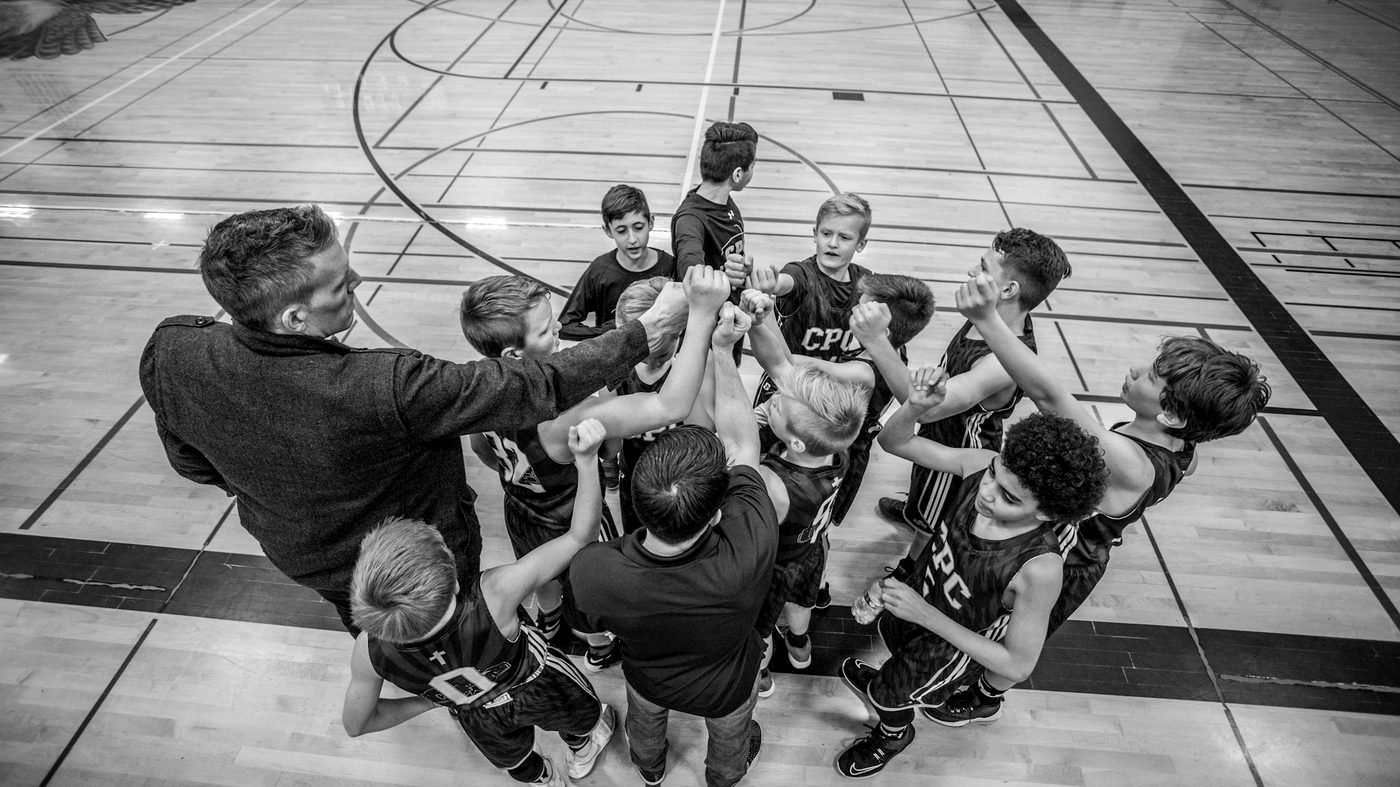
Coach and young basketball players with their hands together in a huddle
Two short weeks fill better than one long block

How I'd set it up:

  1. Two landing pages, or one page with two clear buttons. Each week gets its own dates, price and spots left.
  2. Full-day and half-day options. Working parents need full days. Half-days are an easy yes for families who are home.
  3. A small two-week discount. It rewards families who book both, and it fills your quieter week.
  4. A cap per week. Publish it. A real number of spots makes the deadline believable.

I'd expect one of the two weeks to be harder to fill. Your registrations will tell you which by mid-November. That's where the two-week offer and your returning families do the work.

What should you do this week, before ads go live?

Get the page live and tell last year's families first. Before you spend a dollar on ads, you need dates, hours, ages, price and one registration button on a page that works on a phone. Then give returning families a short head start. They're your cheapest registrations and they'll fill your first spots.

Your checklist for the week of 26 October:

  1. Lock dates and staff. Coaches, rink or gym time, and the cap for each week.
  2. Build the page. Headline with sport, ages and dates. Daily schedule, price, what to bring, coach names, one form.
  3. Set the early-bird deadline. I'd use Sunday 22 November, before Black Friday week.
  4. Email and text returning families. Give them 7 days before the public launch.
  5. Film something. Even 30 seconds of a regular practice. You'll need it for ads next week.

If your page isn't sure whether it's a website or a booking page, our take on landing pages vs websites will help.

What happens week by week from November to camp?

From November, you run ads to parents near your facility, post the camp twice a week, and push hard in the last three weeks before registration closes. The early-bird deadline sits in the middle and pulls undecided parents forward. Every inquiry gets a reply the same day, because that's usually where camps lose registrations.

The countdown

Week ofWhat to do
Mon 26 OctPage live. Returning families get first access. Film footage.
Mon 2 NovPublic launch. Meta ads on, to parents within a realistic drive. Google search ads on "[sport] camp [city]" and "winter break camp [city]".
Mon 9 NovFirst two camp posts on social. Reply to every inquiry the same day. Check: inquiries in vs registrations.
Mon 16 NovEarly-bird reminder email and ad. "Ends Sunday."
Mon 23 NovEarly-bird has ended. Switch messaging to "gift a camp week". Black Friday is Friday 27 Nov.
Mon 30 NovRetarget everyone who visited the page and didn't book. Post spots left, if that's true.
Mon 7 DecLast call. Registration closes Friday 11 Dec. Daily posts and a final email.
Mon 14 DecConfirmation email to every family: drop-off, pick-up, what to bring. Waitlist for anyone you turned away.
Mon 21 DecCamp starts. Film it. You're selling March break with this footage.

I'd put more budget into the last three weeks before the deadline. That's when undecided parents make up their minds.

If your ads get clicks and no registrations, the problem is usually the page or the follow-up, not the ad. More on that in why Meta ads get clicks but not leads.

How do you use Black Friday to sell a winter camp?

Sell the camp week as a gift. From the week of 23 November, frame it as "give your kid a week of hockey (or soccer, or skating) over the holidays." Black Friday is 27 November this year. Grandparents and parents are already buying gifts that weekend, and a camp week is one they can buy from you.

What I'd do:

  1. Add a gift option to the registration form, with a printable card.
  2. Keep the price the same. The gift angle is the offer. A Black Friday discount only trains families to wait.
  3. Send one email on Friday 27 November and one on Monday 30 November.
  4. Run one ad set with the gift message to the same parent audience.

This is a guess, but a sensible one: a gift card for a camp week is an easier buy for a grandparent than a pair of skates in the wrong size.

What do you do if the camp isn't filling by early December?

Look at your inquiries before you cut your price. If parents are asking and not booking, fix the follow-up first. If nobody is asking, widen the ad audience and push the deadline harder. Cutting the price in the last week rewards the families who waited and annoys the ones who paid early.

Work through this in order:

  1. Count inquiries vs registrations. If 20 parents asked and 5 booked, call the other 15 today.
  2. Check reply time. Every inquiry should get a real answer the same day.
  3. Merge or drop the weak week. If week 2 has 4 kids, offer those families week 1 or a half-day option.
  4. Ask your current players. A "bring a friend" spot for anyone already registered.
  5. Then, and only then, consider a last-minute offer. Make it an extra (a free half-day add-on), not a discount.

In my experience, leads come in and nobody follows up. That's usually the leak, not the ad spend.

How do you turn December campers into March break registrations?

Ask them before the camp ends. Families who come in December are your easiest March break registrations, because they already trust your coaches and their kids already want to come back. Send the March break dates with the end-of-camp video, and give them first pick before you announce publicly in January.

In Surrey and Toronto, the 2027 spring break is 15 to 19 March, so families start deciding in January. What I'd send:

  1. Last day of camp: a short highlight video and a thank-you.
  2. Same email: "March break camp is 15 to 19 March. Want first pick?"
  3. First week of January: returning-family registration opens, 7 days before the public.
  4. Ask for a Google review by text the week camp ends, while it's fresh.

That's how one camp sells the next. It's also how a camp program grows. One of our clients, BC Prep, has had 175+ camp sign-ups with us and 400 leads in 6 months at under $7 a lead. Every camp you run is footage and families for the next one.

Sources
Coala Studio · Sports marketing

Want your winter break camp full before 11 December?

We're a sports marketing agency that fills camps, tryouts and memberships around your season. On a 30-minute call we'll look at your December camp and tell you what we'd do this week. If it's something you can do yourselves, we'll say so.

30-minute call · free
Map my winter camp
Questions

Winter break camp FAQ

When is winter break 2026?

In Surrey Schools, the Toronto District School Board and Seattle Public Schools, winter break runs Monday 21 December 2026 to Friday 1 January 2027. Toronto students go back on Monday 4 January. Check your own district, since private schools and other districts vary.

When should I start marketing a winter break camp?

In the last week of October. Get the page live and give returning families first access that week, then launch ads to the public in the first week of November.

When should winter break camp registration close?

I'd close it around Friday 11 December for a camp starting 21 December. That gives you a week to confirm staff and send families their drop-off details.

Should I offer a Black Friday discount on camp?

I wouldn't. Sell the camp week as a gift that weekend at the normal price. Discounts late in the window reward families who waited.

How many camp days are there over winter break 2026?

Up to eight weekdays: 21 to 24 December and 28 to 31 December. Christmas Day and New Year's Day both fall on weekdays this year.


Categories
Sports Marketing

How to Fill a Youth Sports Camp: A Season-by-Season Plan

Sports marketing guide · Camps
The short answer

You fill a youth sports camp by opening registration early, putting each camp on its own landing page, running ads for 6 to 10 weeks before it starts, and replying to every parent inquiry the same day. Then you ask last year's families first, before anyone else sees the dates.

Good sports camp marketing is mostly timing and follow-up. Here's the plan I'd use for any club or academy running holiday, spring or summer camps.

How do you fill a youth sports camp?

You fill a camp by being the first good option a parent sees, and the easiest one to book. Parents plan camps around work and school holidays, often months ahead. So the camp with clear dates, a clear price and a simple form, live before the rush, usually fills before the one that announces late.

The plan in six parts:

  1. Put every camp for the next 12 to 18 months on one calendar.
  2. Give each camp its own landing page with dates, ages, price and one form.
  3. Open early registration for last year's families first.
  4. Run ads 6 to 10 weeks before each camp, with a real deadline.
  5. Reply to every inquiry the same day.
  6. Film the camp and use the footage to sell the next one.

I think the biggest mistake is treating each camp as a one-off. Plan the year, and every camp feeds the next.

When do parents book sports camps?

Earlier than most clubs market. For summer, a lot of families start planning in winter. The American Camp Association's CEO has told parents to start planning as early as December, and some camps open registration on a fixed date and fill fast, according to a 2024 Scripps News report. I'd plan for holiday camps to book closer in, roughly 4 to 8 weeks out.

Here's a typical calendar for a club or academy in Canada or the northern US. Swap in your own school holiday dates.

The youth sports camp calendar

CampWhen parents decideWhen to start marketing
Winter break (late Dec to early Jan)October to NovemberNow: early October
Spring break / March breakJanuary to FebruaryEarly January
Summer campsJanuary to April for most familiesEarly-bird in January, main push February to May
Late-summer / pre-seasonMay to JulyMay
Pro-D days and one-day clinics2 to 4 weeks out4 weeks out, mostly to existing families

The pattern: summer is decided in winter, and winter is decided in the fall. If your summer camp page goes live in May, you're marketing to whoever's left.

How do you market a winter break camp?

Start in early October and sell it as the answer to a working parent's problem: two weeks with no school. Winter break camps are a short, high-intent window. Parents need childcare, kids want to stay active, and your facility is often quieter than usual. Lead with dates, hours, ages and price, then the fun. Here's the week-by-week winter break plan.

What I'd do this month:

Do this month
  1. Get the page live with full-day and half-day options and the exact dates.
  2. Email and text current families first, with a sibling discount if you offer one.
  3. Add a gift option. "Gift a camp week" works well from mid-November.
  4. Run a 6-week ad campaign to parents near your facility, with a clear early-bird deadline.
  5. Post daily in the last two weeks of registration, with spots left, if that's true.

If you're reading this in October, there's still time. I'd bet plenty of families haven't locked in their December plans yet.

What should a sports camp landing page include?

Everything a parent needs to say yes in one visit: dates, daily hours, ages, location, price, what's included, who the coaches are, and one registration button. A camp page isn't a brochure. It's a booking page. Parents arriving from an ad should never have to search your website for the price.

The checklist:

  1. Headline with the camp name, sport, ages and dates.
  2. Daily schedule: drop-off, pick-up, what a day looks like.
  3. Price, early-bird deadline, sibling or multi-week discount.
  4. What to bring, and whether lunch is included.
  5. Coach names and credentials, plus your safety basics.
  6. A short video of last year's camp.
  7. Parent quotes.
  8. One form or registration button, repeated down the page.
  9. FAQ: refunds, missed days, skill level, extended care.

If you're unsure whether you need a full website or just this page, here's our take on landing pages vs websites.

How do you use Meta and Google ads for camp registrations?

Run Meta ads to parents near your facility for 6 to 10 weeks before each camp, and Google search ads on "sports camp" plus your city. Use real camp footage as the creative, one camp per campaign, and a real deadline. Then retarget anyone who visited the page and didn't register.

Setup that works:

  1. Meta: parents within a realistic drive. One short video of kids training and having fun. The headline is the camp name and dates.
  2. Google: "[sport] camp [city]," "winter break camp [city]," "March break camp [city]." Send each to the matching camp page.
  3. Retargeting: a reminder ad with the deadline, shown to page visitors who didn't book.
  4. Budget: I'd spend more in the last 3 weeks before the deadline, when undecided parents are making up their minds.

If your ads get clicks but no sign-ups, it's usually the page or the follow-up. More on that in why Meta ads get clicks but not leads.

Why do camp inquiries go cold, and how do you fix it?

They go cold because nobody follows up fast enough. In my experience, leads come in and nobody follows up, and that's usually the real leak, not the ad spend. A parent comparing three camps will often book the first one that answers their question about drop-off times.

The fix is a simple, written process:

  1. Instantly: automatic email and text with the camp details and the registration link.
  2. Same day: a real reply from a person, answering their question.
  3. Day 2: a short "any questions?" text.
  4. 3 days before the deadline: a reminder with the date.
  5. After the camp fills: a waitlist, and first access to the next camp.

Give each step an owner. Then check every Monday how many inquiries came in and how many registered.

How do you get last year's campers to come back?

Ask them first, before you announce to anyone else. Families who came last year already trust you, so they're your cheapest registrations. Give them a short early window and a small perk, and send them a highlight video of their kid's week before you ask.

Coach and young basketball players with their hands together in a huddle
Ask last year's families first

What I'd send:

  1. The day after camp: a thank-you and a short video of the week.
  2. Two weeks later: "Next camp dates are coming. Want first pick?"
  3. Early window: 7 to 10 days of returning-family registration before public launch.
  4. Referral ask: a sibling or friend discount, at the same time.

Referrals are lovely when they happen, but referrals aren't a strategy, they're luck you can't schedule. The early window is the strategy. Referrals are the bonus.

How should you use early-bird, sibling and multi-week offers?

Use offers to pull decisions forward, not to cut your price for people who'd book anyway. An early-bird with a real end date gives undecided parents a reason to commit now. Sibling and multi-week offers raise the value of each family. Keep it to one or two offers per camp, so the page stays simple.

How I'd set them up:

  1. Early-bird: a modest saving that ends on a fixed date, 3 to 4 weeks before the camp. Put the date in every ad and email.
  2. Returning-family window: first pick of spots, not necessarily a discount.
  3. Sibling offer: a saving on the second child. Parents with two kids are planning around both.
  4. Multi-week offer: a saving for booking 2 or more weeks, which fills your quieter weeks.
  5. No permanent discounts. If the price is always lower, it's just the price.

When the early-bird is about to end, say so in an email and a post. Deadlines move people.

How do parents find sports camps on Google?

Mostly by searching the camp type and their city, so each camp needs its own page with both in the title. "Winter break hockey camp Surrey" and "March break basketball camp Vancouver" are the kinds of searches parents type. A page called "Camps" can't match all of them.

Then keep your Google Business Profile up to date with a post for every camp, real photos, and recent reviews. BrightLocal, a local SEO company, found in its 2026 survey that 97% of consumers read reviews for local businesses. Ask parents for a review by text the week a camp ends, while it's fresh.

What should you post on social media to sell a camp?

Post the camp itself: kids learning a skill, coaches coaching, the day in 30 seconds. Then post the dates, plainly, every few posts. Parents are the buyers, and they want to picture their kid there. Training and camp footage is the number one thing I see clubs not posting enough.

Young soccer players sitting together on the team bench
Parents want to picture their kid there

A simple rhythm in the 6 weeks before a camp:

  1. Two clips a week from last year's camp, or from regular training.
  2. One "what a day looks like" post.
  3. One coach intro.
  4. One post with dates, price and the deadline.
  5. In the last week: spots left, if that's true, and the deadline again.

Judge it on registrations, not likes. A post that gets 40 likes and 6 sign-ups beats one that gets 400 likes and none.

What does a full camp look like in practice?

It looks like a calendar, a page, ads in the window and fast follow-up, all working together. One of our clients, BC Prep, has had 175+ camp sign-ups with us, and 400 leads in 6 months at under $7 a lead. Its reels, posts and ads passed 600,000 views.

175+
camp sign-ups for BC Prep
Coala client result
400
leads in 6 months for BC Prep
Coala client result
600K+
views across BC Prep's reels, posts and ads
Coala client result

What I'd take from it for your own camp:

  1. Use real footage. Parents want to see the actual coaches and the actual gym.
  2. Give every ad one job. One program, one page, one form.
  3. Put the calendar first. Start campaigns before the registration window, not during it.

Read the BC Prep case study. In the meantime, the bigger system is in the complete marketing system for sports academies. If you run a hockey program, our guide on how to market a hockey academy covers that side.

Coala Studio · Sports marketing

Want your next camp full before the deadline?

We're a sports marketing agency that fills camps, tryouts and memberships around your season. On a 30-minute call we'll look at your next camp and tell you what we'd build first. If it's something you can do yourselves, we'll say so.

30-minute call · free

We plan your camp calendar, make reels from your real sessions, and build the pages, ads and follow-up that turn parent interest into sign-ups.

Map my next camp
Questions

Sports camp marketing FAQ

When should I start marketing a summer sports camp?

Open an early-bird for returning families in January and run your main push from February to May. Many parents plan summer in winter, and the American Camp Association's CEO has advised planning as early as December.

How far ahead should I market a winter break camp?

Start in early October. Plan for parents deciding in October and November, so have a page, an early-bird deadline and ads live 6 to 8 weeks before camp starts.

What's the best way to advertise a youth sports camp?

Meta ads to parents near your facility plus Google search ads on "[sport] camp [city]," both pointed at a camp landing page with one form. Use real camp footage as the ad.

How do I get more camp registrations without spending more on ads?

Follow up every inquiry the same day, and give last year's families an early registration window with a small perk. I think those two steps add more sign-ups than extra ad spend.

Should each sports camp have its own landing page?

Yes. Each camp needs its own page with dates, hours, ages, price and one registration button, so parents arriving from an ad can book in one visit.