Categories
Sports Marketing

Pickleball Facility Statistics 2026

Industry statistics · Pickleball
The short answer

24.3 million Americans played pickleball in 2025, up from 4.2 million in 2020, according to the Sports & Fitness Industry Association (SFIA). But only 7.5 million played 8 or more times, and that gap is where clubs win or lose.

Every number here was opened and checked in October 2026 for our pickleball and padel club research. Each one has its source and date. Where a number is ours, from our survey of 27 clubs, we say so.

Key stats

24.3 million
Americans played pickleball in 2025, up from 4.2 million in 2020.
SFIA
7.5 million
were core players (8+ times a year) in 2025, up from 1.4 million in 2020.
SFIA
16.8 million
were casual players (1 to 7 times a year) in 2025, up 23.9%.
SFIA Topline, as reported
22.8%
Participation grew 22.8% in 2025 and 171.8% over three years.
SFIA
42.9%
of US players are women, up from 38.6% in 2020.
SFIA
1.8 million
Canadians play pickleball, up from 1.54 million a year earlier.
Pickleball Canada 2026 survey
55%
Dedicated pickleball facilities grew 55% in a year.
SFIA/Pickleheads, 2024 report
68,458
known US pickleball courts at the start of 2025, including 18,455 added in 2024.
USA Pickleball/Pickleheads
44.4%
of avid players say courts are overcrowded; 39.2% struggle to find opponents at their level.
SFIA/DUPR 2025, n=1,102 avid DUPR players
$913 a year
Avid players spend an average of $913 a year on facility fees, their biggest single cost.
SFIA/DUPR, among those reporting the expense
$149
Median core monthly membership at the US pickleball clubs we surveyed: $149.
Coala survey of published prices, Oct 2026, n=8
17 of 22
clubs that publish booking windows vary them by tier. The median top-tier window is 14 days.
Coala survey of published prices, Oct 2026
1.07 million
About 1.07 million Americans played padel in 2025, its first SFIA measurement.
SFIA/USPA
1,000 padel courts
The US passed 1,000 padel courts in April 2026.
USPA

How many people play pickleball in 2026?

SFIA counted 24.3 million US pickleball players in 2025, up from 4.2 million in 2020 and 22.8% more than in 2024. Only 7.5 million were core players, meaning 8 or more times a year. In Canada, Pickleball Canada's 2026 survey counts 1.8 million players, up from 1.54 million a year earlier.

YearUS players (played at least once)Annual growth
20193.46M
20204.20M
20214.82M
20228.95M85.7%
202313.58M51.8%
202419.81M45.8%
202524.3M22.8%

Source: SFIA participation series, as reported by The Dink (Aug 2025), and SFIA's 2026 release.

Growth is slowing, but it isn't reversing. The 2025 jump still added millions of players.

Canada by province, from the same Pickleball Canada survey: Ontario has about 702,000 players, Quebec about 432,000 and BC about 306,000. Pickleball Canada had 93,888 paid members in 2025.

What it means for your club: there are plenty of players. The job is turning them into regulars.

Who plays pickleball?

Mostly casual players. Of SFIA's 24.3 million US players in 2025, about 16.8 million played 1 to 7 times and 7.5 million played 8 or more. That's roughly two in three players who are casual (our calculation from SFIA). Women are 42.9% of US players, up from 38.6% in 2020.

GroupFigureSource
Core players (8+ times a year), 20257.5 millionSFIA
Casual players (1 to 7 times a year), 202516.8 millionSFIA Topline, as reported
Share of US players who are women, 202542.9% (38.6% in 2020)SFIA
Fitness facility members who play pickleball, 20257.6 million, up 21.3%Health & Fitness Association
Core players' average days played31 in 2023, down from 40 in 2022SFIA

SFIA puts the drop in days played down to a wave of newer core players, not to people quitting.

I think pickleball is more inclusive than golf. More women play in pickleball tournaments than in golf ones. The numbers lean the same way: 42.9% of US pickleball players are women (SFIA), while NGF puts women at about 28% of on-course golfers. They're different surveys, so treat that as a rough comparison.

What it means for your club: your biggest audience plays a few times a year. Build programs for them, not just for your 4.5s.

How many pickleball courts and facilities are there?

USA Pickleball and Pickleheads counted 68,458 known US courts at the start of 2025, including 18,455 added in 2024. Dedicated pickleball facilities grew 55% in a year, according to SFIA and Pickleheads. Even so, SFIA says demand still outstrips supply, with $855 million of court construction needed over the next 5 to 7 years.

MeasureFigureSource
Known US pickleball courts, start of 202568,458USA Pickleball/Pickleheads
Courts added in 202418,455USA Pickleball/Pickleheads
Growth in dedicated pickleball facilities55% in a yearSFIA/Pickleheads, 2024 report
Growth in total courts23% in a yearSFIA/Pickleheads, 2024 report
Court construction needed$855 million over 5 to 7 yearsSFIA/Pickleheads, 2024 report
Canadians who cite a shortage of facilities as a barrier15%Pickleball Canada 2026 survey

Most courts are outdoor. In the same report, 67% of courts were outdoor, and outdoor courts grew faster (28%) than indoor ones (14%). So a good indoor club in a cold market is still scarce.

What it means for your club: there's room for more clubs, but new clubs nearby can copy your courts. Your programs and community are harder to copy.

What do pickleball club memberships cost?

At the US pickleball clubs we surveyed, the median core monthly membership is $149 (n=8, range $59 to $219.99). Canadian clubs sit at about C$140 a month (n=8). Most clubs separate tiers by booking window: the median top tier books 14 days ahead, while free or non-member windows are mostly 5 to 7 days.
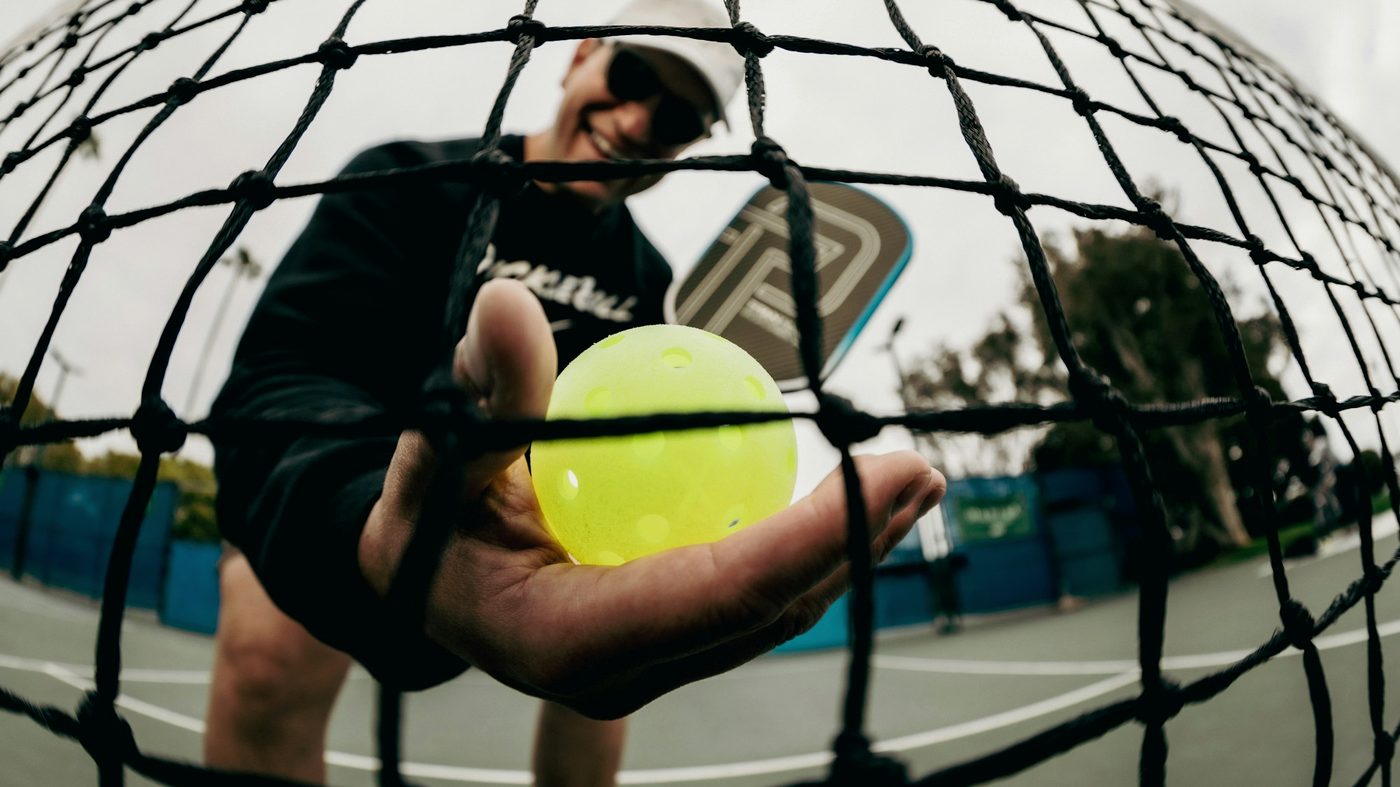
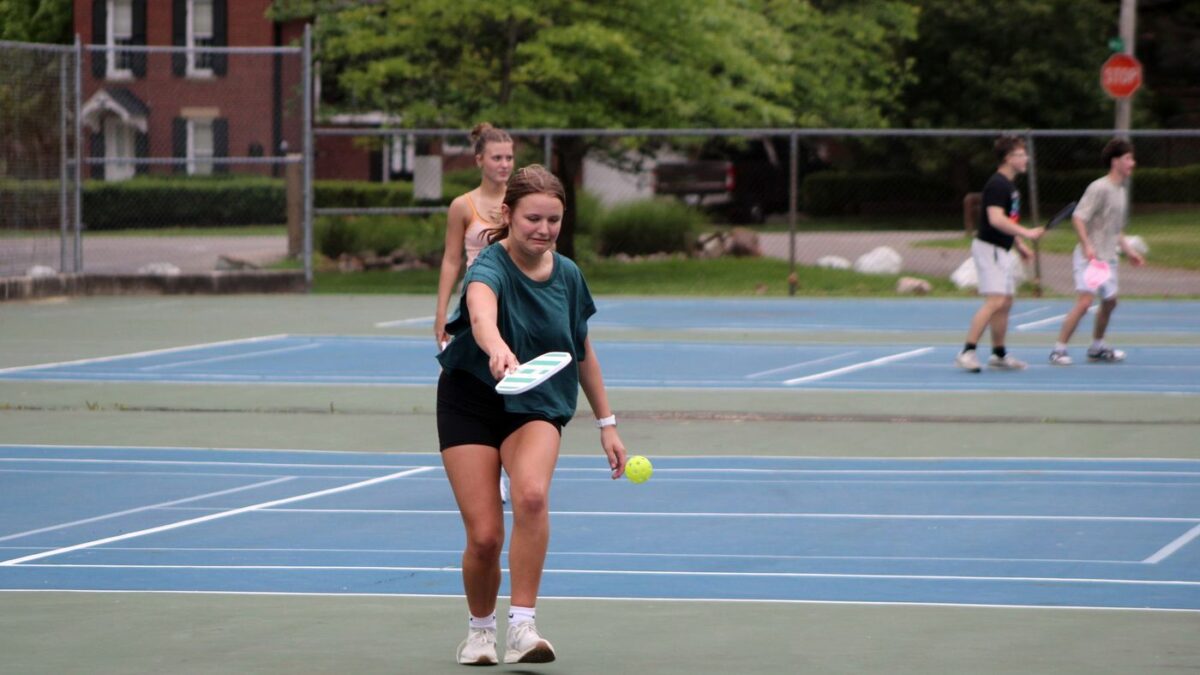
Pickleball player holding a ball up to the net
Booking windows are the most common membership lever
Measure (Coala survey of published prices, Oct 2026)Figure
Median core monthly membership, US pickleball$149 (n=8, range $59 to $219.99)
Median core monthly membership, Canada pickleballabout C$140 (n=8)
Median cheapest paid tier$79.50 US (n=8); C$49.50 Canada (n=8)
Median core monthly membership, US padel-led clubs$199 (n=5)
Clubs that vary booking window by tier17 of 22 that publish windows
Median top-tier booking window14 days (n=21)
Clubs that price by time of day (peak rates or daytime tiers)14 of 27; off-peak discounts 11% to 40%
Daytime-only tier vs full tiermedian 66% of the full price (n=6, including one Fairgrounds location outside the 27)
Clubs with an annual or prepaid option15 of 27; savings about 6.5% to 22%
Couple plan vs two singlesmedian 93% (n=6)
Clubs with free guest passes10 of 27, commonly 4 a month
Clubs including free clinic or league entry in a tier11 of 27
Clubs running founding-member offers6 of 27, capped at 50 to 100 spots
Clubs publishing a trial5 of 27

One example of a ladder: The Picklr's Seattle (Fremont) location runs from a $30, 15-day trial to a $369 family plan. Its tiers are priced mainly on booking window, 14 days at the top versus 7 below.

What it means for your club: price on access, not on hours. A longer booking window is the cheapest perk you can sell.

Why do pickleball players play less or stop?

Crowded courts and not finding a good match. In SFIA and DUPR's 2025 survey of 1,102 avid DUPR players, 44.4% said courts are overcrowded, 39.2% struggle to find opponents at their level and 31.9% have scheduling conflicts. 48% want to play more often. About 3.4 million players stopped playing in 2023.

Barrier (avid players)Share
Overcrowded courts44.4%
Hard to find opponents at their level39.2%
Scheduling conflicts31.9%
Want to play more often48%

Source: SFIA/DUPR 2025 Pickleball Market Playbook, n=1,102 avid DUPR players.

The churn number needs care. About 3.4 million players stopped playing in 2023, according to SFIA data as reported by The Kitchen. That's a count, not a rate, and there's no published figure for later years.

Avid players do spend money once they're in. Among those reporting each cost, the average was $913 a year on facility fees, $688 on lessons, $517 on tournaments and $402 on league fees (SFIA/DUPR). And 60% of avid players are in a league (Sports Destination Management, reporting the same study).

What it means for your club: leveled play and fair booking rules aren't nice extras. They're your retention plan.

When do pickleball players join and leave a club?

In cold markets, players join in fall and January and drift away in summer. Gym data is the best public guide: US gym visits jumped about 21% from December 2024 to January 2025, per Placer.ai. Gymdesk, a gym software vendor, found about two-thirds of trial conversions happen within 14 days.

Retention signalFigureSource
Jump in US gym visits, Dec 2024 to Jan 2025about 21%Placer.ai (gym foot traffic, vendor)
Trial conversions within 14 daysabout two-thirdsGymdesk (vendor, mostly martial-arts gyms)
Members visiting less than every 2 weeks who cancelled within 2 years44.2%, vs 23.2% of members visiting 3+ times a weekGymdesk (vendor)
US fitness operators' member retention, 2024 operationsabout two-thirdsHealth & Fitness Association
Gym members who made a friend in the last 3 months40% less likely to cancel (gym research, 2017)Hillsdon and Bedford

These are gym numbers, not pickleball numbers. Gym research suggests the same thing every club owner sees: people who play at a fixed time with friends stay.

What it means for your club: follow up every trial inside two weeks, put new members in a weekly league or ladder, and have a summer offer ready before May.

How big is padel in North America?

Small, but growing fast. SFIA measured padel for the first time in 2025 and found about 1.07 million US players, about 238,000 of them playing 8 or more times. The US passed 1,000 padel courts in April 2026, according to the USPA. Where one club prices both sports, padel costs about 1.3 to 2 times as much.

MeasureFigureSource
US padel players, 2025about 1.07 millionSFIA/USPA
US core padel players (8+ times), 2025about 238,000SFIA/USPA
US padel courtsjust over 1,000 (April 2026)USPA
USPA individual members, 20252,915USPA
USPA member clubs, 2025108USPA
Padel price vs pickleball at the same clubabout 1.3 to 2x (3 clubs)Coala survey of published prices, Oct 2026

What it means for your club: if you add padel, you're selling a premium sport to people who've mostly never played. Intro sessions come first.

What do the numbers mean for a club owner?

The market is big, mostly casual and still growing. Players want more court time and better matches, and they pay for leagues, lessons and facilities. Most clubs sell memberships priced on booking access. So the plan is to turn casual players into members, then keep them with leveled, scheduled play.

If I ran a 6 to 12 court club, here's what I'd take from this page:

  1. Build for the casual majority. Two in three players are casual.
  2. Tier on booking window. 17 of 22 clubs that publish windows already do.
  3. Fix matching before you buy ads. It's a top barrier for avid players.
  4. Get new members into a league in month one. Routine is what keeps people.
  5. Plan around the cold. Sell fall and January hard, and have a summer offer.

The full plan is in our pickleball club marketing guide. For the complete pricing survey, the calendar and seven plays, get the free Full Courts playbook.

How we compiled these numbers

Every figure was opened at its source on 8 October 2026 for our Full Courts playbook research, then checked a second time. Participation, court and barrier figures come from SFIA, USA Pickleball, Pickleheads, Pickleball Canada, the USPA and the Health & Fitness Association. Vendor figures (Placer.ai, Gymdesk) are labelled as vendor data.

Pricing figures come from our own survey of 27 pickleball and padel clubs (15 US, 12 Canada). We read each club's own website or booking page on 8 October 2026. Prices are as published: USD for US clubs and CAD for Canadian ones, before tax. We didn't use any "average membership cost" articles. Where a sample is small, we show n.

Sources
Coala Studio · Sports marketing

Want more members on your courts, not just more bookings?

We're a sports marketing agency that fills memberships, leagues and clinics around your season. On a 30-minute call we'll look at your club and tell you what we'd build first. If it's something you can do yourselves, we'll say so.

30-minute call · free
Map my next season
Questions

Pickleball statistics FAQ

How many people play pickleball in the US?

SFIA counted 24.3 million US players in 2025, up from 4.2 million in 2020. About 7.5 million were core players who played 8 or more times in the year.

How many people play pickleball in Canada?

Pickleball Canada's 2026 survey counts about 1.8 million Canadian players, up from 1.54 million a year earlier. Ontario, Quebec and BC have the most players.

How much does a pickleball club membership cost?

In our October 2026 survey of published prices, the median core monthly membership at US pickleball clubs was $149 (n=8). Canadian clubs were about C$140 a month (n=8).

How many pickleball courts are there in the US?

USA Pickleball and Pickleheads counted 68,458 known US courts at the start of 2025, including 18,455 added during 2024.

Why do pickleball players stop playing?

Among avid players in SFIA and DUPR's 2025 survey, the top barriers were overcrowded courts (44.4%), finding opponents at their level (39.2%) and scheduling conflicts (31.9%).

Categories
Sports Marketing

Golf Simulator Business Statistics 2026

Industry statistics · Golf simulators
The short answer

US simulator and screen-golf users more than doubled, from 3.8 million in 2015 to 8.1 million in 2024, according to the National Golf Foundation (NGF). NGF now counts at least 1,500 commercial golf simulator businesses in the US.

Every number on this page was opened and checked in October 2026 for our indoor golf research. Each one has its source and date. Where a number is ours, from our own survey of 26 venues, we say so.

Key stats

48.1 million
Americans age 6+ played golf on or off the course in 2025, a record.
NGF
19 million
Americans played golf only off the course in 2025: ranges, simulators and entertainment venues.
NGF
About 38 million
Americans played golf away from a course in 2025.
NGF
3.8 million
US simulator and screen-golf users went from 3.8 million in 2015 to 8.1 million in 2024.
NGF, 2025
51%
of simulator users hadn't played a round on a golf course in the previous 12 months.
NGF, 2025
at least 1,500
NGF counts at least 1,500 commercial golf simulator businesses in the US, nearly three times its 2022 count.
NGF, Nov 2025
28 million
More than 28 million non-golfers say they're very interested in trying entertainment or simulator golf.
NGF, Apr 2026
41%
Golf Canada says about 41% of Canadian golfers have played simulator golf, up from about 23% in 2022.
Golf Canada
$55
Golf facilities report about $55 per simulator session, plus about $40 in food and drink per visit.
NGF operator survey of 354 facilities, 2025
22 of 26
indoor golf venues we surveyed sell a membership.
Coala survey of published prices, Oct 2026, n=26
$149
Median entry-level monthly membership at the US venues we surveyed: $149.
Coala survey of published prices, Oct 2026, n=14
18 of 26
venues we surveyed offer 24/7 access.
Coala survey of published prices, Oct 2026, n=26
91%
In December 2025, outdoor rounds fell 91% in Pittsburgh and 87% in Cleveland year over year.
Golf Datatech / NGF
1 in 4
Only about 1 in 4 beginners becomes a committed golfer.
NGF

How big is the golf simulator market in 2026?

The off-course side of golf is now huge. NGF says 48.1 million Americans played golf in 2025, on or off a course. About 38 million played away from a course, and 19 million played only off it. Simulator users more than doubled in a decade, from 3.8 million in 2015 to 8.1 million in 2024.

MeasureFigureSource
Americans who played golf (on or off course), 202548.1 million (a record)NGF
Played on a golf course, 202529.1 millionNGF
Played away from a course, 2025about 38 millionNGF year-end letter, Dec 2025
Played only off the course, 202519 millionNGF
US simulator and screen-golf users3.8M (2015) to 8.1M (2024)NGF white paper, Apr 2025
Non-golfers very interested in trying sim or entertainment golf28 million+NGF, Apr 2026

That last number is stated interest, not demand. Still, it tells you the pool of people who might try a bay is bigger than the pool of people who already golf.

In Canada, the R&A counts 7.1 million adults playing golf in some form and 5.8 million playing 9 or 18 holes. Golf Canada says about 41% of Canadian golfers have played simulator golf, up from about 23% in 2022. Golf Canada doesn't name the survey behind that figure, so treat it as a direction, not a census.

What it means for your club: the market isn't the problem. Turning a one-off visitor into a member is.

Who uses golf simulators?

Half of them aren't regular course golfers. NGF's 2025 white paper found 51% of simulator users hadn't played a round on a golf course in the previous 12 months, up from 42% a decade earlier. Weather is the top reason people use simulators (59%), followed by practice (43%) and swing analytics (34%).

Why people use simulatorsShare
Play regardless of weather59%
Practice43%
Analytics and data34%
Extended hours23%
Play virtual courses22%

Source: NGF, The Golf Simulator Opportunity, Apr 2025.

Two more things about who's playing. Simulator participation among golfers 50 and over grew 184% over four years, from a small base, and under-50s added more than 3 million participants (NGF, Nov 2025). And roughly two-thirds of new green-grass golfers had played off the course first (NGF, Feb 2026).

I think golf attracts successful people when it's marketed right, and a sim club is a great place to meet them. But your offer has to work for the half who don't think of themselves as golfers yet. Lead with fun, leagues and getting better. Don't lead with handicaps.

What it means for your club: market to two audiences, the winter golfer and the social non-golfer, with different ads and different first offers.

How many golf simulator businesses are there?

NGF counts at least 1,500 commercial golf simulator businesses in the US, nearly three times its 2022 count. NGF says the count isn't exhaustive, and part of the jump comes from better counting, not only new openings. On golf courses, about 6.5% of facilities had simulators in NGF's 2025 survey.

Simulators are more common at golf facilities in cold regions:

RegionShare of golf facilities with simulators
Midwest8.4%
North7.9%
South4%

Source: NGF, The Golf Simulator Opportunity, Apr 2025. These are shares of golf facilities, not of golfers.

The brands are growing too, though these are company claims. Five Iron Golf says it has 50+ locations in 20+ states and 7 countries (Sept 2026). X-Golf says it has 100+ locations. Meanwhile, big entertainment venues are softening: Topgolf's same-venue sales fell 6% in Q2 2025, according to a company filing.

What it means for your club: more competitors are opening nearby, so your edge is the community and the membership, not the hardware.

What do golf simulator memberships cost?

At the US venues we surveyed, the median entry-level membership with play included is $149 a month (n=14), and the median top individual tier is $269 (n=13). 22 of 26 venues sell some kind of membership. Most tiers are separated by how far ahead members can book, not by price per hour.

Friends laughing together over drinks on a night out
Food and drink adds about $40 to a $55 session at facilities with sims
Measure (Coala survey of published prices, Oct 2026)Figure
Venues that sell a membership22 of 26 (all 16 US, 6 of 10 Canadian)
Median entry-level monthly membership, US$149 (n=14)
Median top individual monthly tier, US$269 (n=13)
Canadian play-included tiers start aroundC$179 to C$185 (only 2 publish one)
Most common tier leverBooking window (10 of 17 multi-tier venues)
Median booking window, entry vs top tier7 days vs 14 days (n=13)
Median annual prepay savingabout 25% (8 venues, mixed comparisons)
Venues publishing an initiation fee0 of 26
Published founder memberships4 Swing 365 sites, median $6,500 plus $299 a year

No venue we surveyed publishes a standard initiation fee, though the four founder memberships work much like one.

Here's my opinion. I'd sell memberships over hourly bays every time. A member pays you in July. An hourly customer doesn't. And a longer booking window costs you nothing to give.

What it means for your club: price tiers on access (booking window, hours, guests), not on discounts, and sell the membership in the first visit.

What do indoor golf venues charge per hour?

At the Canadian venues we surveyed, the median non-member bay rate is about C$41 to C$44 at peak (n=10) and C$35 off-peak (n=7). The median US rate is $60 an hour (n=5), though most US membership clubs don't publish a public rate at all. Rates are per bay, not per person.

Measure (Coala survey of published prices, Oct 2026)Figure
Median non-member peak rate, Canadaabout C$41 to C$44 (n=10)
Median non-member off-peak rate, CanadaC$35 (n=7)
Median off-peak discount, Canadaabout 20% (n=7)
Median non-member rate, US$60 (n=5)

Food and drink matter too. At golf facilities with simulators, NGF's operator survey of 354 facilities found an average session of about $55, plus about $40 in food and drink per visit. That's an extra 73% on top of the bay.

What it means for your club: the bay is only part of the visit. Leagues and events that keep people in the building after their tee time lift revenue per visit.

When is golf simulator demand highest?

Demand follows the cold. When outdoor courses close, indoor bookings take over. In February 2025, outdoor rounds fell 70 to 90% year over year in Pennsylvania, Illinois, Ohio and Michigan. In December 2025, rounds fell 91% in Pittsburgh and 87% in Cleveland. Northern sim clubs sell their year between September and March.

Month or windowWhat drives demandSource
Feb 2025Outdoor rounds down 70 to 90% YoY in PA, IL, OH, MINGF / Golf Datatech
Dec 2025Rounds down 91% in Pittsburgh, 87% in Cleveland (Chicago down 22.5%)NGF / Golf Datatech
Black Friday, 27 Nov 202643% of US holiday shoppers planned to buy a gift card in 2025; spend forecast at $29.1BNRF
Holiday party season64% of US companies planned holiday celebrations in 2024Challenger, Gray & Christmas
2027 Masters, 8 to 11 AprilContent and event hook as courses reopenPGA Tour

Not every northern market drops the same. Chicago fell only 22.5% in December 2025. So check your own city's weather before you plan your calendar.

Summer is the hard part. Of the 26 venues we surveyed, none publishes a summer freeze or pause. Five sell a winter or season pass instead, and another five change their prices by season. One Canadian club's month-to-month adult rate runs C$450 from January to April and C$185 from June to September.

What it means for your club: sell winter in August and September, sell gift cards before Black Friday, and have a summer offer ready before April.

How well do golf simulator clubs keep members?

Nobody publishes good churn data for sim clubs, so use golf and fitness as the guide. NGF says only about one in four beginners becomes a committed golfer. Fitness clubs across 27 countries kept about 66.4% of their members in 2024 (HFA). Members who make friends at the club are far less likely to leave.

Retention signalFigureSource
Beginners who become committed golfersabout 1 in 4NGF
Played on a course in 2025 but not 20246 million+, yet on-course golf grew only about 1 millionNGF
Core golfers who say staff don't know their nameabout 1 in 3NGF, Mar 2025
Fitness clubs' average member retention, 202466.4% (HFA, 27 countries)Health & Fitness Association
UK gym members who made a friend at their club40% less likely to cancel (2013 data, gyms not golf)Hillsdon / TRP study

The friend effect is from gyms, not golf. Still, I think a league is the closest thing a sim club has to it. A fixed night with the same group is a reason to keep paying.

What it means for your club: know every member's name, get them into a league in the first month, and call anyone who hasn't booked in 30 days.

What do the numbers mean for a sim club owner?

The market is big and still growing, and half of simulator users aren't regular course golfers. Most venues sell memberships, priced on access. Demand is seasonal, and food, drink and leagues lift each visit. So the winning plan is simple: sign members in winter and give them a reason to stay in summer.

If I ran a sim club, here's what I'd take from this page:

  1. Sell memberships, not hours. 22 of 26 venues already do.
  2. Tier on booking window. It's the most common lever, and it's free.
  3. Plan the year backwards from November. Winter is sold in the fall.
  4. Have a summer offer before April. Nobody we surveyed publishes a pause.
  5. Build leagues early. It's the best retention tool you've got.

We wrote the full plan in how to market a golf simulator business, including the Black Friday gift card push.

How we compiled these numbers

Every figure was opened at its source between 8 and 9 October 2026 for our indoor golf playbook research, then checked a second time. Market and seasonality figures come from NGF, Golf Datatech, Golf Canada, the R&A, NRF and Challenger, Gray & Christmas. Company location counts are company claims, and we say so.

Pricing figures come from our own survey of 26 indoor golf venues (16 US, 10 Canada). We read each venue's own website or booking page on 9 October 2026. Prices are as published: USD for US venues and CAD for Canadian ones, before tax. We didn't use any "average cost" articles. The sample leans toward venues that publish their prices, so treat the medians as a guide, not a census. Where a sample is small, we show n.

Sources
Coala Studio · Sports marketing

Want more members, not just more bookings?

We're a sports marketing agency that fills memberships, leagues and events around your season. On a 30-minute call we'll look at your winter plan and tell you what we'd build first. If it's something you can do yourselves, we'll say so.

30-minute call · free
Plan my winter season
Questions

Golf simulator statistics FAQ

How many people use golf simulators in the US?

NGF counted 8.1 million US simulator and screen-golf users in 2024, up from 3.8 million in 2015. In 2025, 19 million Americans played golf only off the course, at ranges, simulators and entertainment venues.

How many golf simulator businesses are there in the US?

NGF counts at least 1,500 commercial golf simulator businesses, nearly three times its 2022 count. NGF says the count isn't exhaustive, and some of the growth comes from better counting.

How much does a golf simulator membership cost?

At the US venues we surveyed in October 2026, the median entry-level membership with play included was $149 a month (n=14), and the median top individual tier was $269 (n=13).

How much do indoor golf venues charge per hour?

In our October 2026 survey, the median non-member peak rate at Canadian venues was about C$41 to C$44 per bay (n=10), and the median US rate was $60 (n=5). Rates are per bay, not per person.

When is the busiest season for golf simulators?

In northern markets, it's when courses close, roughly November to March. NGF data shows outdoor rounds fell 87 to 91% year over year in Cleveland and Pittsburgh in December 2025.