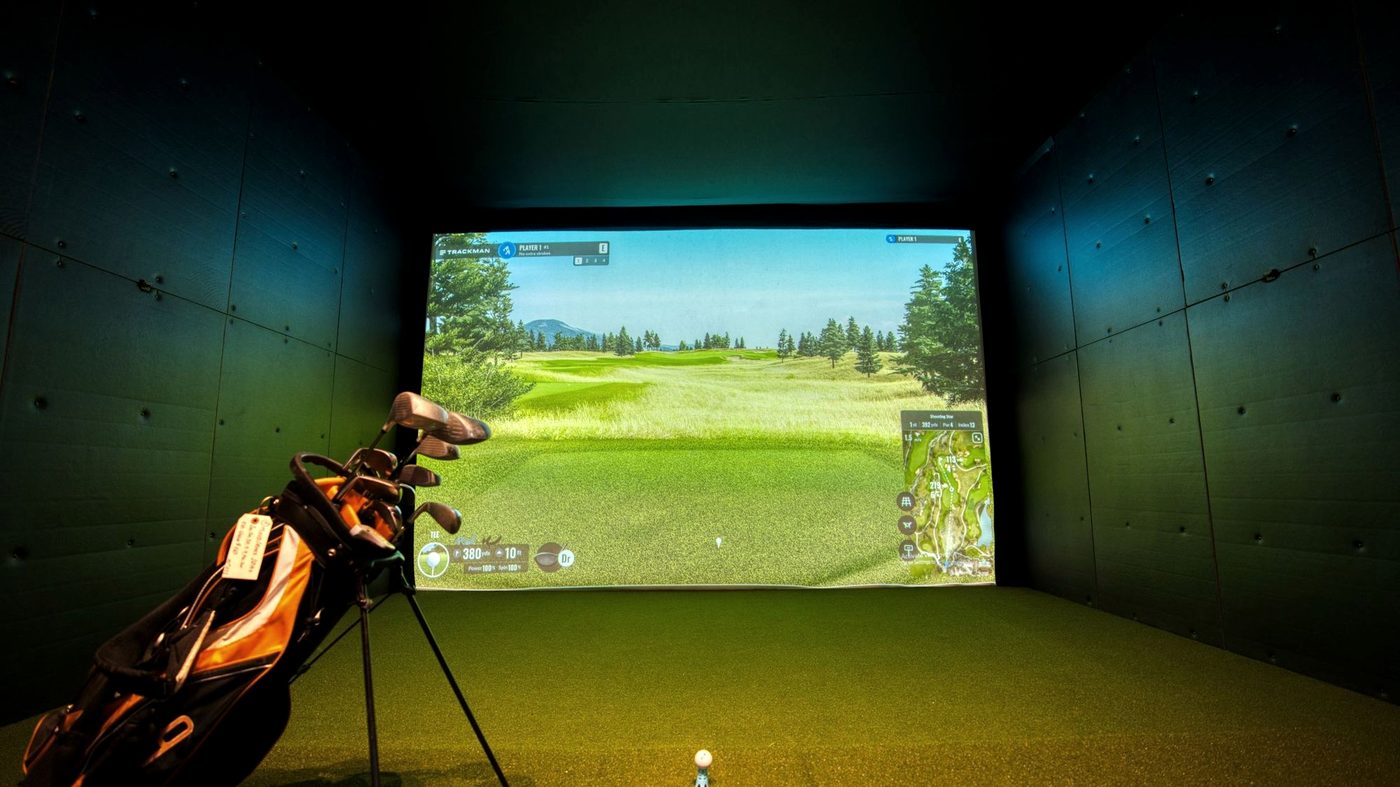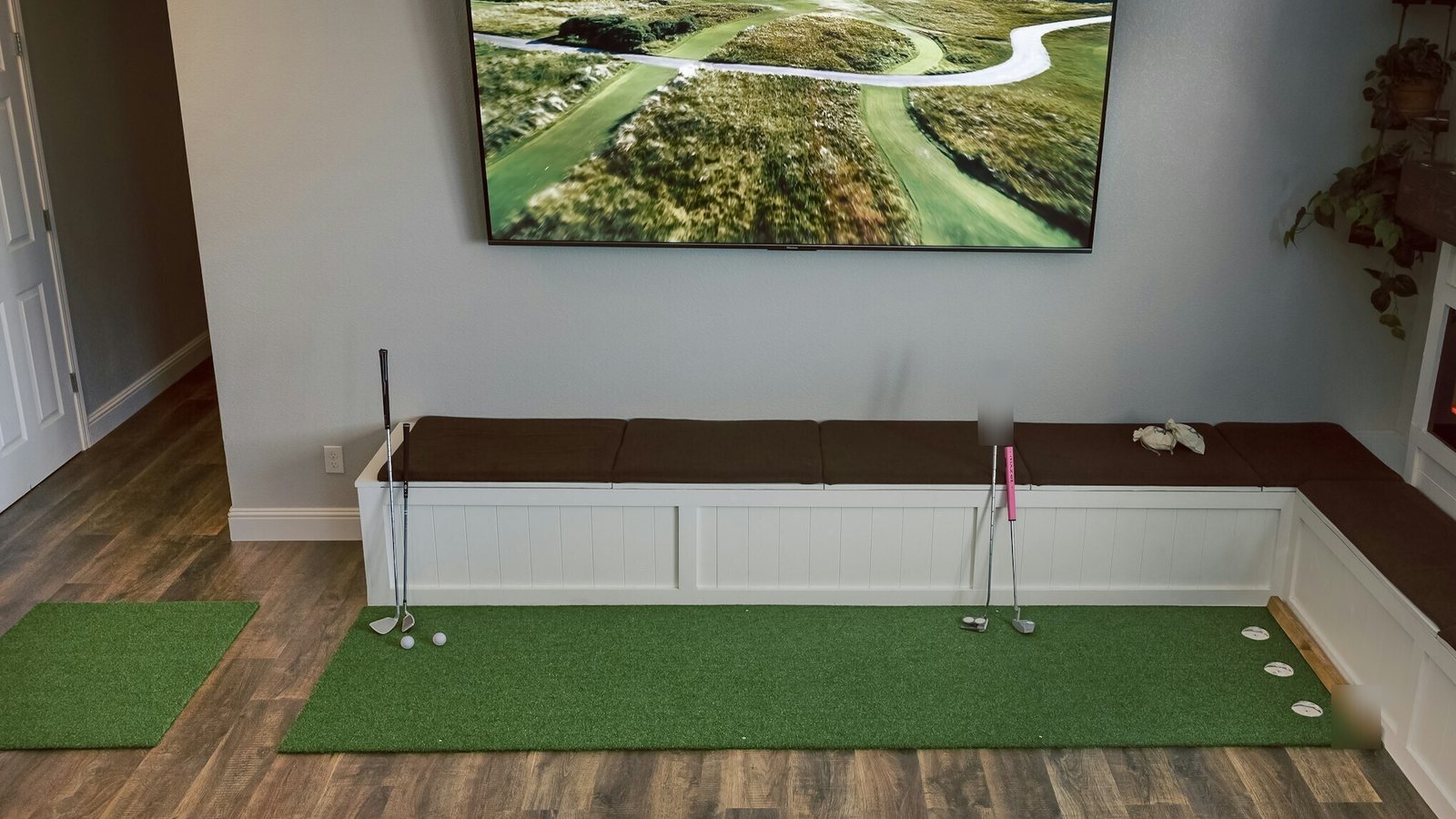
You fill off-peak golf simulator bays by selling those hours as their own products: a daytime league, a weekday membership, coaching blocks and corporate lunch bookings. A plain discount rarely works on its own, because the people who are free at 10am on a Tuesday want a reason to come, not just a cheaper bay.
Here's how I'd build each one.
How do you fill off-peak golf simulator bays?
Build a product for each empty block, then market it to the people who are free at that time. Daytime hours suit retirees, shift workers, juniors after school and companies at lunch. Give each group a fixed slot, a reason to come back weekly, and a price that only works in that window. Then protect your evening and weekend rates.
The plan in five parts:
- List your empty blocks by day and hour.
- Match each block to a group that's free then.
- Build one product per block: league, membership tier, clinic or corporate package.
- Sell it with its own page, its own ads and a start date.
- Keep peak hours at full rate.
When are golf simulator bays usually empty?
Weekday daytime, late night and summer. The evening and weekend bays sell themselves in winter. Daytime is where the gap is, and the pricing pages prove operators know it: in Coala's survey of 26 indoor golf venues (Oct 2026), the median off-peak discount on published public rates was 20% at Canadian venues (n=7).
The same survey found many clubs build membership tiers around the clock. Of the 17 venues we surveyed with more than one paid tier, 7 restrict some tiers to certain days or times. A few examples from their own pricing pages:
| Venue | What they sell for quiet hours |
|---|---|
| 6ix Iron, Toronto | An unlimited off-peak membership, plus 25% off peak time |
| Golfology, St. Petersburg FL | An "Early Birdie" unlimited tier, 10am to 5pm only |
| Joy House Golf, Winnipeg | A winter member rate for weekdays before 5pm |
| Clubhouse 24/7, Nova Scotia | Cheaper hourly rates on weekday mornings and overnight |
Summer is its own problem. We cover the full season in how to market a golf simulator business.
Should you discount off-peak golf simulator time?
Not on its own. A discount tells people the hour is worth less, and it rewards golfers who'd have come anyway. Use price to shape a product instead: a daytime membership that only works before 4pm, or a league with a fixed weekly slot. The product gives people a reason to come. The price keeps it in the quiet hours.
I think off-peak is a product problem, not a price problem. A 20% discount on a Tuesday morning nobody wants is still a Tuesday morning nobody wants.
One more reason to be careful: a permanent discount trains your best customers to wait. If peak and off-peak are the same golfers, you've just cut your own rate.
Who books a golf simulator on a weekday morning?
People whose time is free when everyone else's isn't: retirees and older golfers, shift workers, parents during school hours, juniors after school, and companies at lunch. Each group needs a different offer and a different message. Older golfers are a real and growing audience for simulators, so treat them as a segment, not an afterthought.
NGF's November 2025 research found simulator participation among golfers aged 50 and over rose 184% over four years. That's from a small base, so I wouldn't build the whole club around it. But it's a clear sign that weekday-daytime golfers are out there.
Who I'd target, by block:
- Weekday mornings: 50+ golfers and retirees. A weekly league or practice group.
- Late morning: parents during school hours. Lessons and short practice sessions.
- Lunch: local companies. Team bookings with food.
- After school: juniors. Clinics and coaching blocks.
- Late night (if you're 24/7): shift workers and keen golfers. Members-only access.

How do you run a daytime golf simulator league?
Give it a fixed weekly slot, a set number of weeks and a reason to show up: standings, handicaps, a prize. A daytime league turns an empty Tuesday morning into a booking that repeats for eight or ten weeks. The social side matters as much as the golf, because people come back for the group.
Golfzon's advice, as reported by Golf Digest in May 2026, is to run a venue like a bowling alley: weekday leagues, weekend walk-ins. That's the right frame for daytime too.
How I'd set one up:
- Pick the slot: for example Tuesday and Thursday, 10am to noon.
- Set the length: 8 weeks plus a finals week.
- Format: teams of 2 or 4, handicapped, 9 holes a week.
- Prize: a lunch, a lesson or a free month. Something that brings them back.
- Launch: sell it 4 to 6 weeks before week 1, to members first.
Then start selling the next session before this one ends.
How do you sell corporate lunch and team bookings?
Package it so an office manager can book it in one email: a 90-minute bay block, a short coached challenge and food, at a fixed price per head. Sell it to companies within a short drive, at lunch on weekdays when your bays are empty. Put it on its own page with a simple inquiry form.
Holiday parties are part of this window too. Challenger, Gray & Christmas found 64% of US companies planned holiday celebrations in 2024 (a survey of 173 HR leaders). Not every one is a sim booking, but the ones that are need a package ready to send in November.
What the package should include:
- Bay time for the group, with a set start and end.
- A closest-to-the-pin or long-drive challenge, with a host.
- Food and drinks, or a clear catering option.
- One price per person.
- Photos they can share internally.
How should a daytime membership work?
Make it clearly cheaper than a full membership, and clearly limited to the hours you need filled. Add guardrails so members can't hoard bays. Then use it as the entry point: a daytime member who loves the club is your easiest upgrade to a full membership in the evenings.
Guardrails I'd copy from published pricing pages:
- Hours: valid only in a defined window, like weekdays before 4pm.
- Daily cap: 6ix Iron caps members at 2 hours a day.
- One active booking: 6ix Iron also allows one active booking at a time.
- Booking window: a shorter window than full members (the median entry tier in our survey books 7 days out, against 14 for top tiers).
- Members-only hours: an Indoor Golf Club in New Jersey keeps hours after 9pm for members only, per Golf Digest (May 2026).
Five Iron Golf, for example, says its membership includes daily golf during weekday daytime "Member Benefit Hours." The principle is the same at any size: members fill the quiet hours, the public pays full rate at peak.

How do you market off-peak time without hurting peak prices?
Market each off-peak product to its own audience, on its own page, with its own ads. Don't put "cheap Tuesday mornings" on your homepage. Run Meta ads for the daytime league to 50+ golfers nearby, a corporate page for office managers, and a clinic page for parents. Your peak price stays the headline.
A simple off-peak marketing plan:
- One landing page per product, with the time window in the headline.
- Member email first, before public ads.
- Meta ads by audience: 50+ golfers near you, local businesses, parents.
- Google search: "golf simulator league [city]," "corporate golf event [city]."
- Film it: a 30-second reel of the daytime league having fun beats any discount banner.
Judge it on bookings in those hours, week by week. If Tuesday 10am isn't filling, change the product before you change the price. For more numbers on the market, see our golf simulator statistics, and for what we build for sim clubs, see golf simulator marketing.
- 6ix Iron memberships page (live, undated, checked 9 Oct 2026): off-peak unlimited plus 25% off peak; 2 hours a day max; 1 active booking
- Golfology membership list (checked 9 Oct 2026): Early Birdie Unlimited, 10am to 5pm
- Joy House Golf rates (checked 9 Oct 2026): member rate weekdays before 5pm
- Clubhouse 24/7 pricing (checked 9 Oct 2026): lower weekday morning and overnight rates
- Five Iron Golf membership page (company claim, checked 9 Oct 2026): daily golf during weekday daytime Member Benefit Hours
- Golf Digest, "Paying dues: how are indoor clubs profiting from the golf boom?", 1 May 2026: Golfzon's "weekday leagues, weekend walk-ins" advice; New Jersey club members-only after 9pm
- NGF, "Screen Golf's Growth is Not Simulated," 13 Nov 2025: simulator participants aged 50+ up 184% over four years (small base)
- Challenger, Gray & Christmas, 10 Dec 2024: 64% of companies planned holiday celebrations in 2024 (n=173)
Got empty bays on weekday mornings?
We're a sports marketing agency that fills memberships, leagues and bookings around your season. On a 30-minute call we'll look at your quiet hours and tell you what we'd build first. If it's something you can do yourselves, we'll say so.
Questions, answered
What counts as off-peak for a golf simulator?
Usually weekday daytime, late night and summer. Many clubs publish lower rates or daytime-only membership tiers for those hours. In Coala's Oct 2026 survey, the median off-peak discount on published Canadian public rates was 20% (7 venues).
Should I discount off-peak golf simulator time?
Not on its own. Build products for those hours instead: a daytime league, a weekday membership, coaching blocks or corporate lunches. Use price to keep each product in the quiet window.
How do I start a daytime golf simulator league?
Pick a fixed weekly slot, run 8 weeks plus a finals week, use handicaps and a prize, and sell it to members 4 to 6 weeks before it starts.
Who plays golf simulators during the day?
Retirees and older golfers, shift workers, parents during school hours, juniors after school and companies at lunch. NGF found simulator participation among golfers aged 50 and over rose 184% over four years, from a small base.
How do I stop daytime members taking peak bays?
Limit the tier to set hours, cap daily play, allow one active booking at a time and give it a shorter booking window than full members.